

The Sabi Sand Reserve
One of the great wildlife destinations on earth
One of the great wildlife destinations on earth
Here animals move freely, and the leopards are never far
Here animals move freely, and the leopards are never far
Officially established in 1934 by a group of pioneering landowners who chose conservation over farming, it became the Sabi Sand Nature Reserve in 1948. Many of the founding families – now in their third and fourth generations – still own the land today. It is widely recognised as the birthplace of the luxury African safari.
The reserve is a collection of privately owned properties sharing a 50-kilometre unfenced border with the Kruger National Park, forming part of one of the largest and most biodiverse wilderness areas in Africa. Wildlife moves freely across this landscape, as it has for centuries.
The reserve’s management is among the most progressive on the continent, setting the standard for how private conservation and community development can work together.


Private Reserve vs National Park
Private Reserve vs National Park
Because Sabi Sand is privately owned and managed, the experience it offers is fundamentally different from a national park.
Only guests staying at its lodges may enter – no day visitors, no tour buses, no self-drivers. Your guide can follow animals off-road, stay with a sighting for as long as it takes, and take you out after dark. Guided bush walks are permitted too, bringing you into contact with the landscape at
ground level.
In a national park, none of this is possible. In Sabi Sand, it is simply how safari works.

The Wildlife
The Wildlife
The Sabi Sand is home to one of the highest concentrations of wildlife in Africa. The Big Five – lion, leopard, elephant, buffalo and rhino – are resident year-round, and the open boundary with Kruger means animals move freely across a vast, connected ecosystem.
Leopard sightings here are unlike anywhere else on the continent. The reserve’s guides have tracked and come to know individual leopards over years – their territories, their habits, their family lines. At Arathusa, approximately fourteen leopards move through our traversing area, six of which are seen regularly. These are not fleeting glimpses. They are close, relaxed, and consistent.
Lion prides are well established across the reserve, and general game is abundant – giraffe, zebra, wild dog, hyena, and a remarkable diversity of birdlife, with over 350 species recorded. Over 90% of Arathusa guests see the Big Five during their stay, and sightings of all five in a single day are not uncommon.
The Wildlife
The Wildlife
The Sabi Sand is home to one of the highest concentrations of wildlife in Africa. The Big Five – lion, leopard, elephant, buffalo and rhino – are resident year-round, and the open boundary with Kruger means animals move freely across a vast, connected ecosystem.
Leopard sightings here are unlike anywhere else on the continent. The reserve’s guides have tracked and come to know individual leopards over years – their territories, their habits, their family lines. At Arathusa, approximately fourteen leopards move through our traversing area, six of which are seen regularly. These are not fleeting glimpses. They are close, relaxed, and consistent.
Lion prides are well established across the reserve, and general game is abundant – giraffe, zebra, wild dog, hyena, and a remarkable diversity of birdlife, with over 350 species recorded. Over 90% of Arathusa guests see the Big Five during their stay, and sightings of all five in a single day are not uncommon.


Why location matters
Why location matters
Arathusa sits in the northern section of the Sabi Sand, close to the unfenced boundary with the Kruger National Park. This positioning is not incidental – it is one of the reasons wildlife sightings here are so consistently exceptional.
Animals move freely between Kruger and the Sabi Sand, following water, territory, and prey. Our traversing area sits directly in the path of this movement, giving our guides access to an unusually active and wildlife-rich stretch of land – and our guests encounters that feel genuinely unplanned and wild.

A year-round destination
A year-round destination
The Sabi Sand can be visited at any time of year, and each season offers something genuinely different.
The dry winter months – roughly May through September – bring cooler temperatures, sparse vegetation, and animals concentrated around water sources. Visibility is excellent, sightings are frequent, and the Arathusa waterhole comes into its own as a focal point of activity.
The green season – November through April – transforms the landscape. The bush is lush, birdlife is at its most vibrant, newborn animals appear across the reserve, and the summer light is extraordinary for photography.
October and April sit between the two – warm, transitional months that offer good game viewing and a landscape caught between seasons.

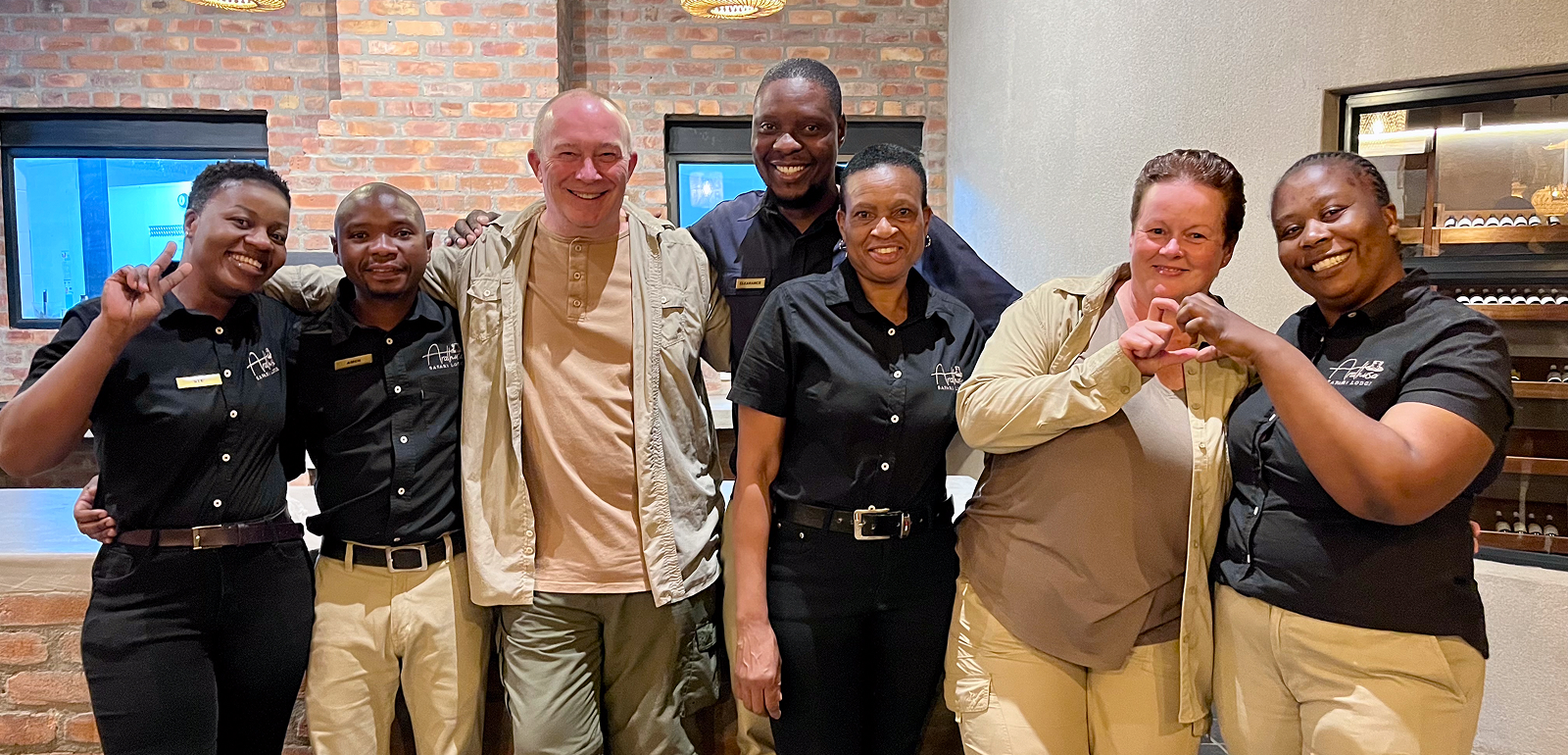
Every image on this page was taken by Nik Barratt – a guest who has visited Arathusa so many times that he’s become part of the family. His pictures are taken across many trips and many seasons – and they still don’t capture everything he’s seen.

